

Thermal imaging scopes have become increasingly popular in hunting, wildlife observation, security surveillance, law enforcement, and search and rescue operations. Unlike traditional optical scopes, thermal imaging devices can detect targets in complete darkness and challenging weather conditions.
But how exactly does a thermal imaging scope work?
Understanding the science behind thermal detection can help users appreciate the advantages of this advanced technology and choose the right thermal optic for their needs.
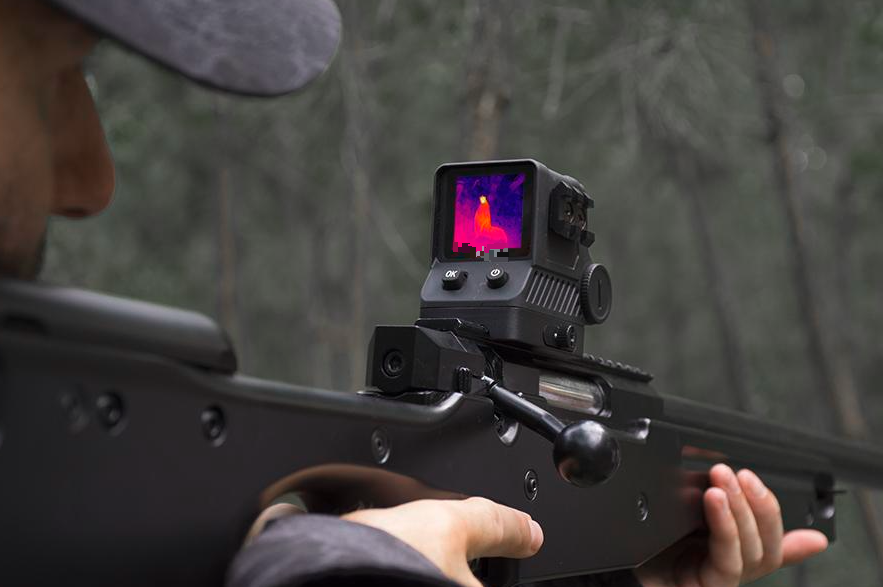
Understanding Infrared Energy
Every object with a temperature above absolute zero emits infrared energy, also known as thermal radiation.
Humans cannot see infrared energy with the naked eye because it exists outside the visible light spectrum. However, thermal imaging technology is specifically designed to detect this invisible heat.
Warm objects such as people, animals, vehicles, and machinery emit stronger infrared signals than their surroundings, making them easy to identify through a thermal scope.
The Core Components of a Thermal Imaging Scope
Thermal Sensor
The thermal sensor is the heart of the system.
It captures infrared radiation from the environment and converts it into electronic signals. Modern thermal scopes often use advanced uncooled microbolometer sensors that provide reliable performance while reducing power consumption.
Higher-resolution sensors produce sharper thermal images and improve target identification capabilities.
Optical Lens
Unlike traditional optics that use visible light, thermal scopes use special infrared lenses, often made from germanium material.
These lenses collect infrared radiation and focus it onto the thermal sensor for processing.
Image Processor
The image processor converts infrared data into a visible image displayed on the screen.
Advanced image processing algorithms enhance image clarity, improve contrast, reduce noise, and help users distinguish targets from the background.
Display Screen
The processed thermal image is displayed through an OLED, AMOLED, or LCD screen inside the scope.
Users can view temperature differences in real time, making target detection faster and more efficient.
How Thermal Images Are Created
When infrared energy reaches the thermal sensor, the sensor measures temperature differences across the observed scene.
The processor then assigns colors or shades to different temperature levels.
Common display modes include:
- White Hot
- Black Hot
- Red Hot
- Fusion Mode
- Rainbow Mode
- Iron Red
These color palettes help users identify targets under various environmental conditions.
Why Thermal Scopes Work in Complete Darkness
Traditional optical devices require visible light to form an image.
Thermal imaging scopes operate differently because they detect heat rather than light.
As long as a target emits infrared energy, it can be detected regardless of lighting conditions.
This capability allows thermal scopes to perform effectively during:
- Nighttime operations
- Dense forests
- Foggy environments
- Smoke-filled areas
- Low-visibility conditions
Detection vs Identification
One important concept in thermal imaging is the difference between detection and identification.
Detection
Detection refers to discovering the presence of a target.
Thermal scopes excel at quickly detecting people, animals, or vehicles due to their heat signatures.
Recognition
Recognition involves determining the type of target, such as distinguishing between a deer and a wild boar.
Identification
Identification requires sufficient image detail to positively identify a specific target.
Higher-resolution thermal sensors significantly improve recognition and identification performance.
Applications of Thermal Imaging Scopes
Hunting
Hunters use thermal scopes to locate game during nighttime and in dense vegetation.
Wildlife Observation
Researchers monitor animal behavior without disturbing natural habitats.
Security Surveillance
Thermal imaging enables continuous monitoring of facilities and critical infrastructure.
Search and Rescue
Emergency responders use thermal technology to locate missing persons quickly.
Law Enforcement
Police and tactical teams rely on thermal optics for suspect tracking and operational awareness.
Modern Innovations in Thermal Imaging
Recent advancements have dramatically improved thermal scope performance.
Popular features now include:
- AI-assisted target recognition
- Laser rangefinder integration
- Ballistic calculation systems
- Wi-Fi connectivity
- Video recording
- Picture-in-picture display
- Extended battery life
- High-resolution thermal sensors
These innovations make thermal imaging scopes more capable than ever before.
Choosing the Right Thermal Imaging Scope
When selecting a thermal scope, users should consider:
- Sensor resolution
- Detection range
- Refresh rate
- Lens size
- Display quality
- Battery life
- Waterproof rating
- Recording capabilities
- Ballistic functions
Choosing the appropriate combination of features ensures optimal performance for specific applications.
Conclusion
Thermal imaging scopes use advanced infrared detection technology to reveal heat signatures that are invisible to the human eye. By converting thermal radiation into detailed images, these devices provide exceptional target detection capabilities in darkness and adverse weather conditions.
As thermal technology continues to evolve, thermal imaging scopes are becoming indispensable tools for hunting, security, surveillance, wildlife observation, and professional field operations. Their ability to detect what traditional optics cannot see makes them one of the most powerful observation technologies available today.