

Maritime security has become increasingly important as governments, coast guards, port authorities, and offshore operators face growing challenges related to illegal activities, smuggling, piracy, unauthorized vessel movements, and search-and-rescue operations.
Traditional optical surveillance systems often struggle in low-light environments, fog, rain, and nighttime conditions. Thermal imaging technology addresses these limitations by detecting heat signatures rather than relying on visible light.
Today, thermal imaging systems have become an essential component of modern maritime security infrastructure.
Injie Optics provides advanced thermal imaging solutions designed to support coastal surveillance, harbor security, offshore monitoring, and maritime law enforcement operations.
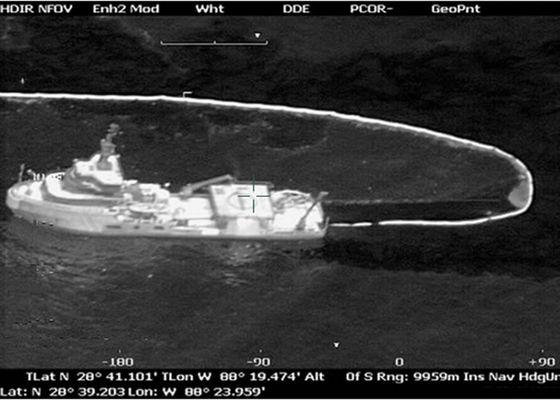
Why Maritime Security Requires Thermal Imaging
The maritime environment presents unique surveillance challenges:
- Vast monitoring areas
- Nighttime operations
- Changing weather conditions
- Long observation distances
- Continuous vessel movement
- Limited visibility
Traditional cameras can lose effectiveness when visibility decreases.
Thermal imaging systems allow operators to maintain surveillance capabilities regardless of lighting conditions.
Key Benefits
✔ 24-hour monitoring
✔ Long-range target detection
✔ Enhanced situational awareness
✔ Improved threat identification
✔ Faster response times
How Thermal Imaging Works at Sea
Every object emits infrared radiation based on its temperature.
Thermal imaging cameras detect these heat signatures and generate a visual image.
Common maritime targets include:
- Fishing vessels
- Cargo ships
- Speedboats
- Offshore platforms
- Human occupants
- Navigation structures
Even in complete darkness, thermal cameras can reveal heat-emitting targets against cooler water backgrounds.
This makes target detection significantly easier.
Key Maritime Security Applications
1. Coastal Surveillance
Coastal authorities monitor extensive shorelines to prevent:
- Illegal entry
- Smuggling activities
- Unauthorized landings
- Suspicious maritime activity
Thermal imaging systems enable long-range monitoring both day and night.
Benefits
- Continuous surveillance
- Early threat detection
- Reduced blind spots
- Enhanced operational awareness
2. Harbor and Port Security
Ports are critical infrastructure facilities requiring constant monitoring.
Thermal imaging supports:
- Dock monitoring
- Vessel traffic observation
- Restricted area protection
- Intrusion detection
Port security teams can quickly identify unusual activity and respond accordingly.
3. Vessel Detection and Tracking
Thermal imaging cameras help operators detect:
- Small boats
- Fast-moving vessels
- Unlit craft
- Distant maritime targets
Thermal signatures often make vessels visible long before they can be identified through conventional optics.
4. Offshore Platform Protection
Oil and gas platforms require robust security measures.
Thermal imaging assists with:
- Perimeter monitoring
- Vessel approach detection
- Unauthorized access prevention
- Infrastructure protection
Continuous observation helps improve operational safety.
5. Search and Rescue Operations
Thermal imaging plays a critical role in maritime rescue missions.
Rescue teams use thermal cameras to locate:
- People overboard
- Life rafts
- Disabled vessels
- Survivors in low-visibility conditions
Heat signatures can often be detected faster than visual observation alone.
Advantages
✔ Faster victim detection
✔ Expanded search capability
✔ Improved rescue efficiency
Thermal Imaging vs Traditional Marine Cameras
| Feature | Traditional Camera | Thermal Imaging Camera |
|---|---|---|
| Requires Light | Yes | No |
| Night Operation | Limited | Excellent |
| Detects Heat | No | Yes |
| Vessel Detection | Good | Excellent |
| Through Smoke/Fog | Limited | Better |
| Search & Rescue | Moderate | Outstanding |
| Coastal Surveillance | Good | Excellent |
Essential Features for Maritime Thermal Imaging Systems
High Thermal Resolution
Common sensor options include:
- 256×192
- 384×288
- 640×512
Higher resolutions provide:
- Better image clarity
- Longer identification ranges
- Enhanced target recognition
Long Detection Range
Maritime operations often require monitoring targets several kilometers away.
Professional thermal systems support:
- Long-range vessel detection
- Offshore monitoring
- Coastal observation
Laser Rangefinder Integration
Advanced systems combine:
- Thermal imaging
- Laser distance measurement
- Digital observation
This allows operators to accurately determine target distance.
Waterproof and Corrosion-Resistant Design
Marine environments demand rugged construction.
Important features include:
- Waterproof housing
- Saltwater resistance
- Shock protection
- Temperature stability
Why Choose Injie Optics Maritime Thermal Solutions?
Injie Optics develops professional thermal imaging products suitable for maritime applications.
Product Portfolio
- Thermal monoculars
- Thermal binoculars
- Thermal imaging rangefinders
- Long-range thermal observation systems
- Multi-sensor surveillance platforms
OEM & ODM Services
We support:
- Private label projects
- Custom branding
- Product customization
- International distribution partnerships
Key Advantages
✔ Advanced thermal sensors
✔ Factory-direct pricing
✔ Strict quality control
✔ Global technical support
✔ Flexible customization options
Future Trends in Maritime Thermal Surveillance
The future of maritime security will increasingly rely on intelligent thermal technologies.
Emerging developments include:
AI-Powered Vessel Recognition
Automatically identifying vessel types and behaviors.
Multi-Sensor Fusion
Combining:
- Thermal imaging
- Radar
- Night vision
- Laser rangefinding
for enhanced surveillance performance.
Autonomous Coastal Monitoring
Smart surveillance networks capable of continuous automated monitoring.
Cloud-Based Command Systems
Real-time information sharing between multiple monitoring stations.
Conclusion
Thermal imaging technology has become an indispensable tool in modern maritime security operations.
Its ability to detect vessels, people, and potential threats in complete darkness and challenging weather conditions provides a significant operational advantage over traditional observation systems.
Whether for coastal surveillance, harbor protection, offshore security, or search and rescue missions, Injie Optics offers advanced thermal imaging solutions designed to improve maritime situational awareness and operational effectiveness.
As maritime security challenges continue to evolve, thermal imaging will remain one of the most important technologies for protecting coastlines, ports, vessels, and offshore infrastructure.