

Security and surveillance professionals face increasing challenges in protecting critical infrastructure, commercial facilities, residential properties, and public spaces. Traditional cameras and optical observation devices often struggle in darkness, fog, smoke, and adverse weather conditions.
Thermal imaging scopes have emerged as a powerful solution for modern security operations. By detecting heat signatures instead of relying on visible light, these advanced devices provide reliable target detection around the clock.
As security threats continue to evolve, thermal imaging technology is becoming an essential component of professional surveillance systems worldwide.
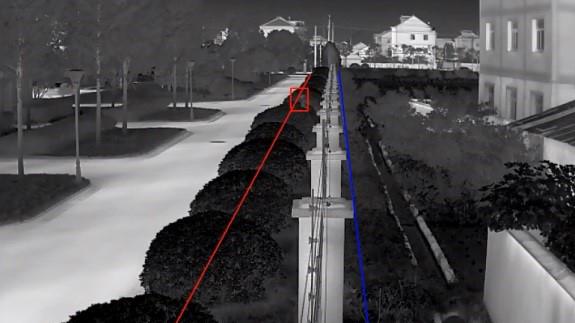
What Is a Thermal Imaging Scope?
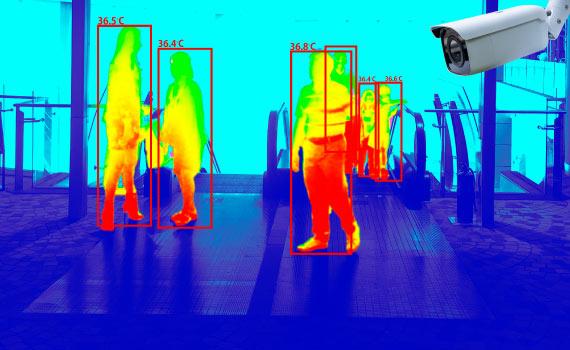
A thermal imaging scope is an optical device that detects infrared radiation emitted by objects and converts temperature differences into visible images.
Unlike conventional surveillance cameras, thermal scopes can identify people, vehicles, and other heat-producing objects even in complete darkness.
This capability makes thermal imaging an ideal tool for security monitoring and threat detection.
Why Security Professionals Choose Thermal Imaging Scopes
24/7 Monitoring Capability
Security operations never stop.
Thermal imaging scopes provide continuous observation regardless of lighting conditions, allowing personnel to maintain situational awareness throughout the day and night.
Early Threat Detection
Intruders often attempt to exploit darkness or poor visibility to avoid detection.
Thermal imaging technology quickly identifies heat signatures, enabling security teams to detect suspicious activity before a threat escalates.
Reduced False Alarms
Traditional motion sensors can be triggered by shadows, lighting changes, or environmental factors.
Thermal imaging focuses on temperature differences, helping operators distinguish real threats from harmless environmental changes.
Performance in Challenging Conditions
Thermal scopes remain effective in:
- Complete darkness
- Fog
- Smoke
- Dust
- Light rain
- Low-visibility environments
These capabilities significantly enhance surveillance reliability.
Key Security and Surveillance Applications
Perimeter Protection
Protecting facility boundaries is one of the most common applications for thermal imaging scopes.
Security personnel can monitor fences, entrances, restricted zones, and large outdoor areas while detecting unauthorized access attempts at long distances.
Critical Infrastructure Security
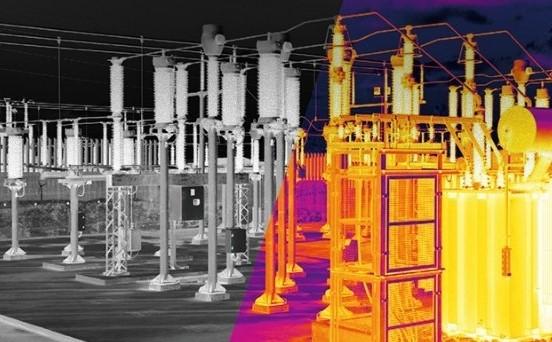
Power plants, communication centers, oil and gas facilities, water treatment plants, and transportation hubs require constant protection.
Thermal imaging scopes help security teams detect potential threats before they reach sensitive assets.
Border and Coastal Surveillance
Government agencies use thermal imaging technology to monitor large border regions and coastal areas.
Heat detection enables operators to identify individuals, vehicles, and vessels under low-light conditions.
Commercial Property Protection
Shopping centers, warehouses, factories, logistics parks, and office complexes benefit from thermal surveillance systems that provide reliable monitoring throughout the night.
Residential Security
High-end residential communities increasingly adopt thermal imaging technology to enhance perimeter protection and improve response times to potential intrusions.
Thermal Imaging for Law Enforcement
Law enforcement agencies frequently deploy thermal imaging scopes during tactical operations.
Applications include:
- Suspect tracking
- Perimeter security
- Vehicle monitoring
- Search operations
- Officer safety enhancement
Thermal detection allows officers to locate individuals hiding in darkness or concealed environments more efficiently.
Search and Rescue Support
Security teams and emergency responders often work together during rescue missions.
Thermal imaging scopes help locate missing persons in:
- Forests
- Mountains
- Disaster zones
- Urban environments
- Low-visibility conditions
The ability to detect body heat can significantly reduce search times and improve rescue outcomes.
Features That Improve Surveillance Performance
Modern thermal imaging scopes offer advanced functions designed for professional security applications.
Long Detection Range
High-performance thermal sensors can detect human-sized targets at considerable distances.
High-Resolution Thermal Sensors
Improved sensor resolution enhances image quality and target recognition.
Multiple Color Palettes
Different display modes allow operators to optimize visibility under changing environmental conditions.
Video Recording
Built-in recording capabilities support evidence collection and incident documentation.
Wireless Connectivity
Many thermal scopes enable image sharing and remote monitoring through mobile devices or command centers.
Laser Rangefinder Integration
Some models combine thermal imaging with laser rangefinding technology to provide accurate distance measurements.
Future Trends in Security Thermal Imaging
The future of thermal surveillance continues to evolve through innovations such as:
- Artificial intelligence target recognition
- Automated intrusion detection
- Cloud-based monitoring systems
- Enhanced image processing
- Higher-resolution thermal sensors
- Extended battery life
- Smart security integration
These technologies are helping organizations build more effective and intelligent security solutions.
Conclusion
Thermal imaging scopes have become indispensable tools in modern security and surveillance operations. Their ability to detect heat signatures in darkness, adverse weather, and challenging environments provides advantages that conventional optical systems cannot match.
From perimeter protection and critical infrastructure security to law enforcement and search-and-rescue missions, thermal imaging technology enhances situational awareness, improves threat detection, and strengthens overall security performance.
As thermal technology continues to advance, its role in professional surveillance systems will only become more important in the years ahead.