

Thermal imaging technology has evolved from a specialized military tool into an essential solution used across numerous industries. By detecting infrared radiation and visualizing heat differences, thermal imaging cameras enable users to see what traditional optical devices cannot.
Today, thermal imaging is widely used in security, industrial inspection, firefighting, hunting, wildlife conservation, maritime surveillance, and many other fields.
In this article, Injie Optics explores the top 10 applications of thermal imaging technology and how it continues to transform modern industries.
1. Security and Surveillance
One of the most common uses of thermal imaging is security monitoring.
Thermal cameras help security personnel:
- Detect intruders
- Monitor restricted areas
- Protect critical infrastructure
- Conduct perimeter surveillance
Because thermal imaging detects heat rather than visible light, it remains effective during day and night operations.
Benefits
✔ Long-range detection
✔ 24/7 monitoring
✔ Improved situational awareness
2. Border Security and Patrol
Border agencies increasingly rely on thermal imaging systems to monitor large and remote areas.
Applications include:
- Detecting unauthorized crossings
- Monitoring vehicle movement
- Supporting patrol operations
- Enhancing threat detection
Thermal imaging provides reliable performance even in darkness and adverse weather conditions.
3. Search and Rescue Operations
Time is critical during rescue missions.
Thermal imaging helps teams locate:
- Missing persons
- Lost hikers
- Disaster victims
- Survivors in low-visibility environments
Heat signatures can often be detected much faster than with conventional observation equipment.
Advantages
✔ Faster search operations
✔ Improved rescue efficiency
✔ Enhanced responder safety
4. Firefighting and Emergency Response
Firefighters use thermal imaging cameras to:
- Locate hidden fire sources
- Identify hotspots
- Navigate smoke-filled environments
- Search for trapped individuals
Thermal imaging significantly improves operational effectiveness during emergency situations.
5. Wildlife Observation and Conservation
Researchers and conservation teams use thermal imaging for:
- Monitoring animal populations
- Studying nocturnal wildlife
- Anti-poaching operations
- Habitat assessments
Because thermal imaging is non-invasive, animals can be observed without disturbance.
6. Hunting and Outdoor Observation
Thermal imaging has become increasingly popular among hunters.
Benefits include:
- Detecting animals at night
- Locating hidden game
- Improving observation efficiency
- Supporting ethical hunting practices
Thermal scopes and thermal binoculars are now standard equipment for many professional hunters.
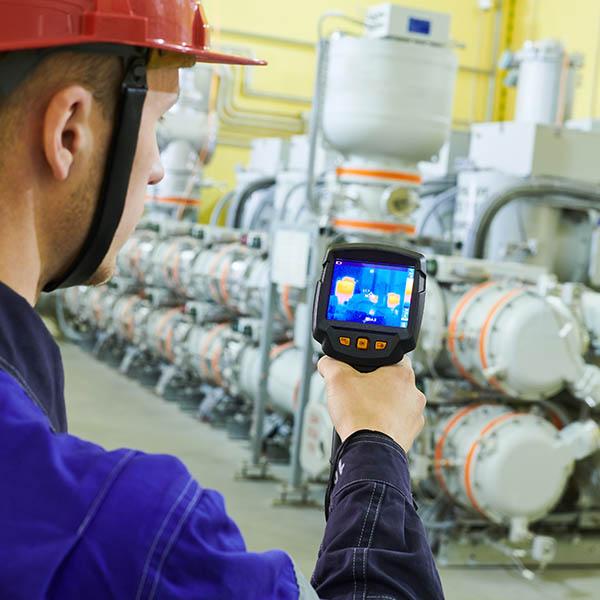
7. Industrial Inspection
Industrial thermal cameras help engineers identify equipment issues before failures occur.
Applications include:
Electrical Inspection
Detecting:
- Overloaded circuits
- Loose connections
- Electrical faults
Mechanical Inspection
Identifying:
- Bearing failures
- Motor overheating
- Equipment wear
Preventive maintenance reduces downtime and operational costs.
8. Building Inspection and Energy Audits
Thermal imaging helps inspectors identify:
- Heat loss
- Air leakage
- Insulation deficiencies
- Moisture intrusion
Property owners use thermal surveys to improve energy efficiency and reduce utility costs.
9. Maritime Surveillance and Navigation
Thermal imaging enhances maritime safety through:
- Vessel detection
- Harbor monitoring
- Coastal surveillance
- Search and rescue operations
Marine thermal cameras improve visibility during nighttime and poor weather conditions.
10. Law Enforcement and Tactical Operations
Police and tactical teams use thermal imaging for:
- Suspect tracking
- Perimeter security
- Tactical observation
- Surveillance operations
Thermal cameras provide critical information that supports decision-making in complex environments.
Why Thermal Imaging Continues to Grow
Several factors are driving increased adoption of thermal imaging technology:
Improved Sensor Technology
Modern sensors offer:
- Higher resolution
- Better image quality
- Greater detection ranges
Lower Equipment Costs
As technology advances, thermal imaging becomes more accessible to commercial and professional users.
Expanded Applications
Industries continue to discover new ways to use thermal imaging for efficiency, safety, and operational improvement.
Injie Optics Thermal Imaging Solutions
Injie Optics provides a complete range of thermal imaging products including:
Thermal Monoculars
Portable thermal observation devices for outdoor and professional use.
Thermal Binoculars
Long-range thermal observation systems for surveillance and wildlife monitoring.
Thermal Rifle Scopes
Precision thermal optics for hunting and tactical applications.
Thermal Imaging Rangefinders
Advanced systems combining thermal detection with accurate distance measurement.
OEM and ODM Services
Custom thermal imaging solutions for distributors, brands, and professional users worldwide.
Future Trends in Thermal Imaging Technology
Emerging technologies include:
- AI-assisted target recognition
- Automatic object tracking
- Integrated laser rangefinders
- Cloud-connected monitoring platforms
- Multi-sensor fusion systems
These innovations will further expand the capabilities of thermal imaging across industries.
Conclusion
Thermal imaging technology has become an indispensable tool in modern industries. From security and border patrol to industrial inspection and wildlife conservation, thermal cameras provide unique advantages that improve safety, efficiency, and situational awareness.
As thermal imaging continues to evolve, Injie Optics remains committed to delivering innovative thermal observation solutions that meet the needs of customers around the world.