

Hunting technology has evolved significantly over the past decade. Among the most important innovations, thermal imaging scopes have transformed how hunters locate, track, and identify game in challenging environments. By detecting heat signatures rather than relying on visible light, thermal scopes provide a clear advantage during both day and night operations.
Today, professional hunters, wildlife managers, and outdoor enthusiasts increasingly rely on thermal imaging technology to improve efficiency, safety, and accuracy in the field.
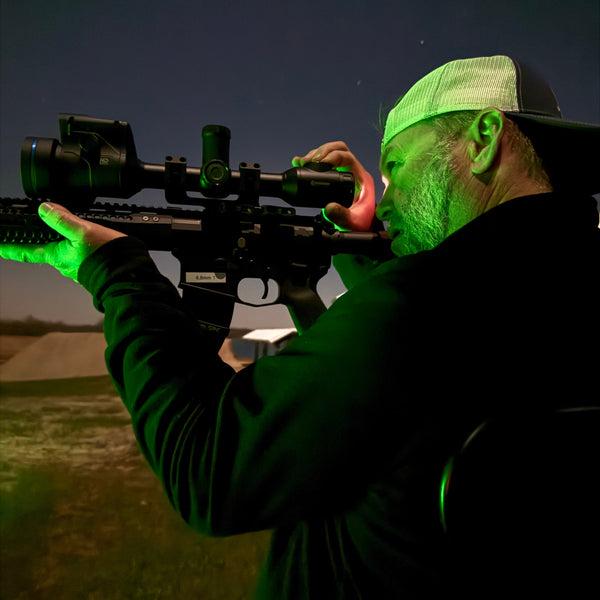
The Challenge of Traditional Hunting Optics
Conventional rifle scopes and binoculars depend on available light to produce clear images. During dawn, dusk, nighttime, or adverse weather conditions, visibility can become limited.
Common obstacles include:
- Dense vegetation
- Low-light environments
- Fog and mist
- Smoke and dust
- Camouflaged animals
These conditions often make it difficult to detect targets using standard optical equipment.
How Thermal Imaging Scopes Improve Hunting Success
Rapid Target Detection
Thermal imaging scopes identify animals based on body heat. This allows hunters to quickly locate game even when animals are partially hidden by grass, bushes, or trees.
Better Night Hunting Performance
Unlike traditional optics, thermal scopes do not require moonlight or artificial illumination. They provide clear thermal images in complete darkness.
Increased Safety
Thermal technology helps hunters distinguish animals from surrounding objects, reducing the risk of misidentification and improving overall safety during outdoor activities.
Wider Observation Capabilities
Many thermal scopes feature digital zoom, image enhancement algorithms, and multiple color palettes that improve target recognition across different environments.
Important Features for Hunters
High-Resolution Thermal Sensor
A high-quality thermal detector delivers sharper images and improved target identification at longer distances.
Long Detection Range
Advanced thermal scopes can detect large animals or vehicles at significant distances, providing hunters with more reaction time.
Ballistic Calculator Integration
Some professional thermal scopes include ballistic calculation systems that help users achieve more accurate shots under varying conditions.
Video Recording and Connectivity
Built-in recording functions allow users to capture hunting experiences and share footage through mobile applications.
Rugged Construction
Outdoor environments demand equipment that can withstand rain, dust, impact, and extreme temperatures.
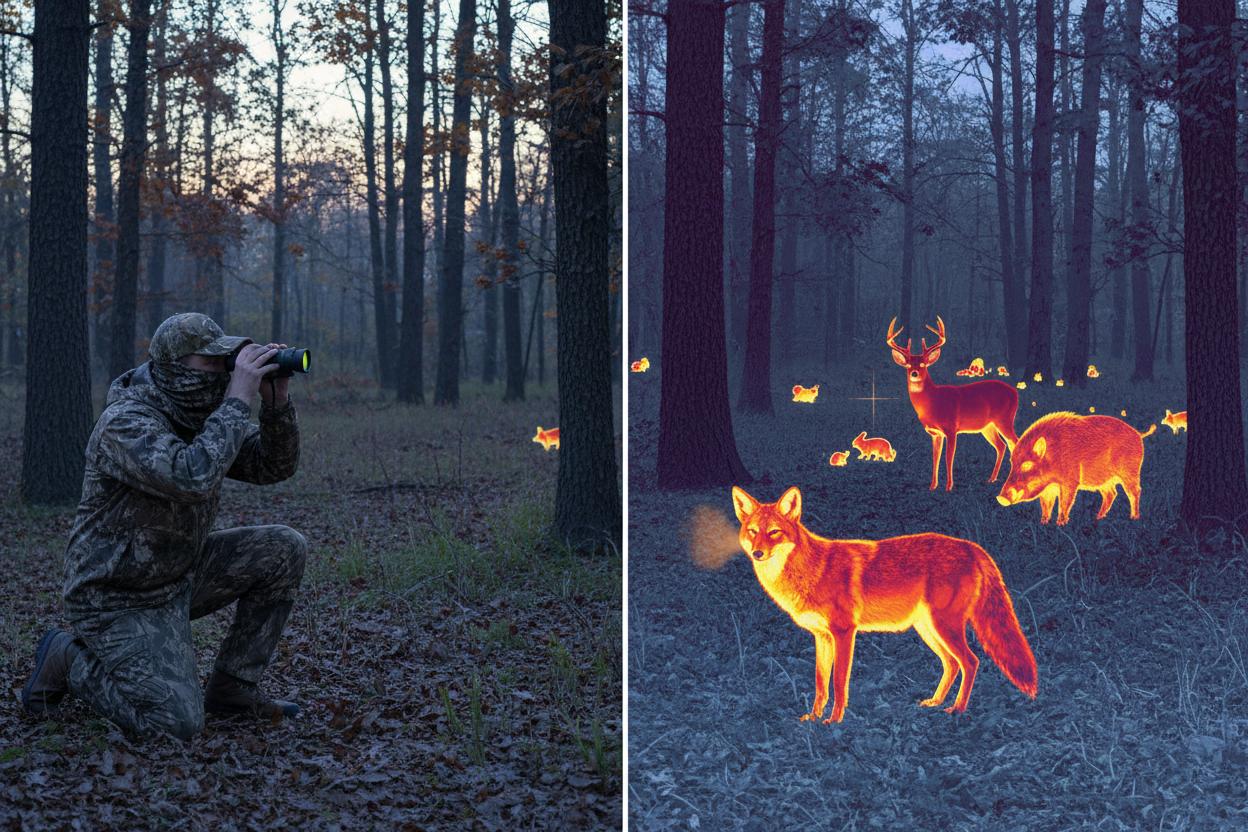
Applications Beyond Hunting
Although thermal imaging scopes are widely used for hunting, their capabilities extend to numerous industries:
Wildlife Research
Researchers use thermal optics to monitor animal populations and behaviors without disturbing natural habitats.
Farm and Livestock Protection
Farmers can detect predators and monitor livestock activity during nighttime hours.
Search and Rescue Operations
Thermal scopes help emergency teams locate missing persons quickly in forests, mountains, and disaster areas.
Security Patrol
Thermal imaging technology enables security personnel to detect intruders and monitor large areas regardless of lighting conditions.
Future Trends in Thermal Imaging Scopes
Modern thermal optics continue to evolve with innovations such as:
- AI-assisted target recognition
- Higher-resolution sensors
- Extended battery life
- Faster image processing
- Lightweight designs
- Enhanced wireless connectivity
As technology advances, thermal imaging scopes are expected to become even more accurate, efficient, and affordable.
Conclusion
Thermal imaging scopes have become one of the most valuable tools for modern hunters and outdoor professionals. Their ability to detect heat signatures in complete darkness and difficult environments offers advantages that traditional optics simply cannot match.
Whether for hunting, wildlife observation, security patrol, or search and rescue missions, thermal imaging scopes deliver reliable performance when visibility matters most. As demand continues to grow worldwide, thermal technology is set to play an increasingly important role in outdoor observation and target detection.