

Non-contact temperature measurement, millisecond-level response, and visualized heat distribution—thermal imaging technology is revolutionizing traditional temperature measurement methods. From nanomaterial research in scientific laboratories to monitoring 2000°C furnaces in steel plants, infrared thermal imagers can precisely capture every detail of a temperature field.
Scientific Frontiers
A research team at Peking University once used thermal imaging cameras to capture the electrothermal deformation process of carbon nanotube composites, clearly visualizing even the heat transfer paths in phase-change materials. Meanwhile, a university in Xi’an utilized 1000°C laser scanning on carbon fiber panels, quickly identifying internal defects through differences in thermal diffusion. These breakthroughs have been published in top-tier journals such as Advanced Functional Materials.
Industrial Revolution
In the metallurgical industry, thermal imaging technology has achieved full-process coverage—from rotary kiln monitoring to ladle temperature measurement. A 3000°C-range thermal imaging camera, combined with an air-cooled protection system, can operate stably in high-dust environments and even monitor slag formation inside calcium carbide furnaces in real time.
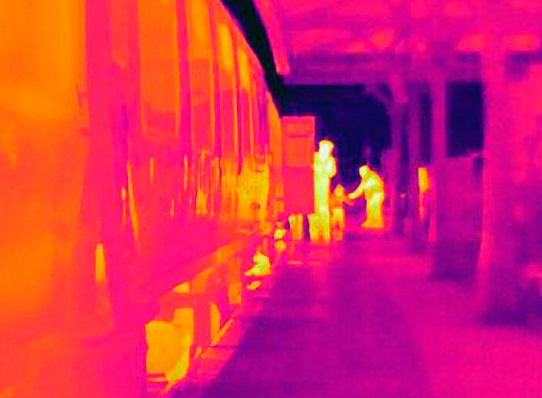
A New Favorite in Civilian Use
Today, smartphone-compatible thermal imaging devices are entering everyday life. When choosing one, pay attention to three key factors:
Resolution – Determines whether tiny hotspots on circuit boards can be clearly identified
Adjustable Focus – Helps detect hidden issues deep within pipelines
Cross-Platform Apps – Enable automatic high-temperature marking, allowing even beginners to become inspection experts
From nanoscale material research to steelmaking blast furnaces, from power line inspection to household leak detection, this technology—capable of converting heat into visible images—is redefining the boundaries of temperature measurement.