

Selecting the right imaging technology is essential for professionals working in firefighting, law enforcement, search and rescue, border security, and industrial inspection. While traditional night vision devices have been widely used for decades, modern thermal imaging—especially dual fusion technology—offers significant advantages in many operational environments.
INJIE Dual Fusion Thermal Imaging Devices combine infrared thermal detection with high-definition visible imaging, providing users with greater situational awareness and more reliable target identification in complex environments.
Understanding Traditional Night Vision
Traditional night vision devices amplify available ambient light, including moonlight and starlight, to produce a visible image in dark environments.
Advantages
High image detail under low-light conditions
Natural-looking scene representation
Effective for navigation at night
Lower power consumption on some models
Limitations
Night vision technology relies on available light. Performance decreases significantly in environments with:
Complete darkness
Heavy smoke
Dense fog
Dust storms
Strong backlighting
Bright headlights or flashlights
In these situations, identifying people or hidden objects becomes increasingly difficult.
Understanding Thermal Imaging
Thermal imaging detects infrared energy emitted by all objects based on their temperature rather than relying on reflected light.
Because every person, vehicle, and piece of equipment emits heat, thermal cameras can locate targets regardless of lighting conditions.
Thermal imaging performs effectively in:
Total darkness
Smoke-filled buildings
Foggy environments
Light rain
Forest operations
Disaster zones
Underground facilities
This capability makes thermal imaging one of the most valuable technologies for emergency responders.
The Advantage of Dual Fusion Technology
Rather than choosing between thermal and visible imaging, INJIE Dual Fusion Thermal Imaging Devices combine both into a single display.
Users can simultaneously observe:
Structural details
Roads and buildings
Heat signatures
Human targets
Vehicles
Potential hazards
Fusion mode significantly reduces interpretation errors while improving operational confidence.
Performance Comparison
| Feature | Traditional Night Vision | INJIE Dual Fusion Thermal Imaging |
|---|---|---|
| Complete Darkness | Limited | Excellent |
| Smoke Penetration | Poor | Excellent |
| Fog Performance | Limited | Very Good |
| Human Detection | Moderate | Excellent |
| Heat Source Detection | Not Available | Excellent |
| Fire Rescue | Limited | Excellent |
| Law Enforcement | Good | Excellent |
| Search & Rescue | Moderate | Excellent |
| Industrial Inspection | Not Suitable | Excellent |
| Electrical Inspection | Not Available | Excellent |
Firefighting Applications
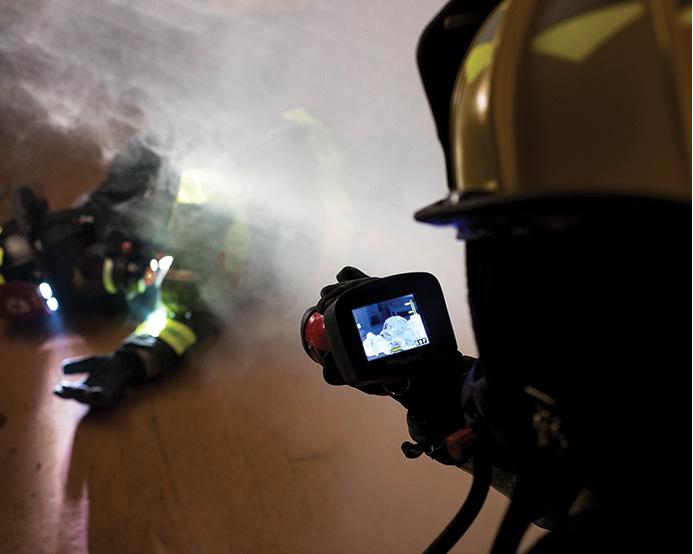
Firefighters frequently operate inside smoke-filled structures where visibility approaches zero.
Thermal imaging enables crews to:
Locate trapped victims
Detect hidden fire sources
Monitor structural temperatures
Identify dangerous hotspots
Improve evacuation planning
Fusion imaging provides additional structural context, allowing firefighters to understand both building layouts and temperature distribution simultaneously.
Tactical Law Enforcement
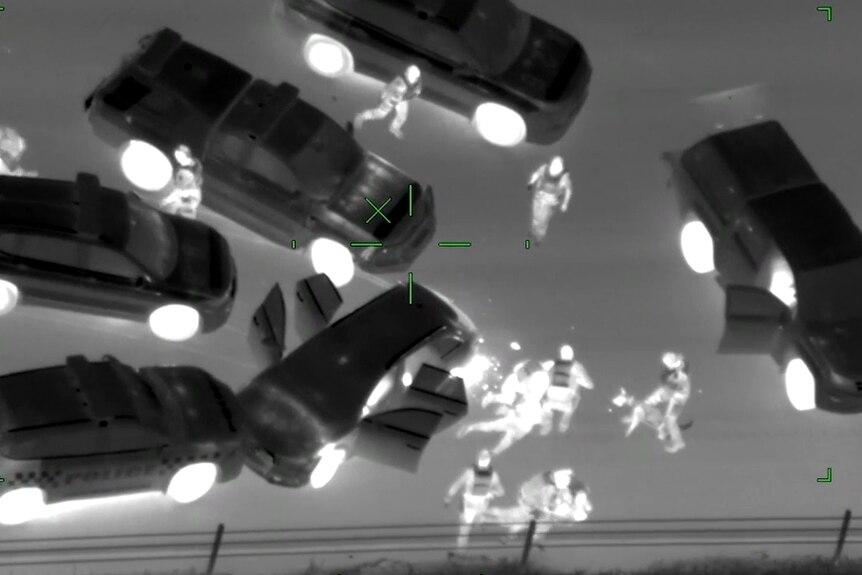
Modern police departments increasingly deploy thermal imaging for:
Suspect tracking
Night patrol
Perimeter security
Border monitoring
Tactical entry
Rural surveillance
Thermal detection identifies concealed individuals based on body heat, even when they are hidden by vegetation or darkness.
Search and Rescue Operations
Missing persons often become difficult to locate after sunset or in mountainous terrain.
Thermal fusion technology helps rescue teams quickly identify human heat signatures while maintaining awareness of surrounding obstacles such as rocks, trees, rivers, and damaged infrastructure.
This combination improves rescue speed and enhances responder safety.
Industrial and Infrastructure Inspection
Beyond public safety, thermal imaging plays an essential role in preventive maintenance.
Engineers use thermal cameras to inspect:
Electrical substations
Solar power installations
Mechanical equipment
Pipelines
Manufacturing facilities
HVAC systems
Abnormal temperature patterns often reveal developing faults before equipment failure occurs, reducing maintenance costs and minimizing downtime.
Why Professionals Choose INJIE Dual Fusion Thermal Imaging
INJIE develops professional imaging systems designed for demanding field environments.
Key product advantages include:
High-resolution infrared sensors
HD visible-light cameras
Real-time fusion imaging
Multiple display palettes
Digital zoom
Laser ranging on selected models
Electronic compass and tilt sensor
Wireless image transmission
Video recording
Rugged IP-rated construction
Long battery operating time
These features make INJIE devices suitable for government agencies, emergency responders, industrial inspectors, and security professionals worldwide.
Looking Ahead
As thermal sensor technology becomes more advanced and affordable, dual fusion imaging is rapidly replacing traditional night vision in many professional applications. Future systems will integrate artificial intelligence, automated target recognition, cloud connectivity, and unmanned aerial platforms, creating smarter and more efficient emergency response solutions.
INJIE remains committed to delivering innovative thermal imaging products that improve safety, operational efficiency, and decision-making across firefighting, law enforcement, search and rescue, and industrial inspection.