

As optical technology continues to advance, outdoor enthusiasts, hunters, security professionals, and wildlife observers are faced with an important question: Should you choose a Night Vision Scope or a Thermal Imaging Scope?
Both technologies are designed to improve visibility in low-light conditions, but they operate in very different ways and serve different purposes. Understanding their strengths and limitations can help you select the best solution for your application.
INJIE Optics offers both Night Vision Scopes and Thermal Imaging Scopes, providing professional users with advanced observation capabilities for day and night operations.
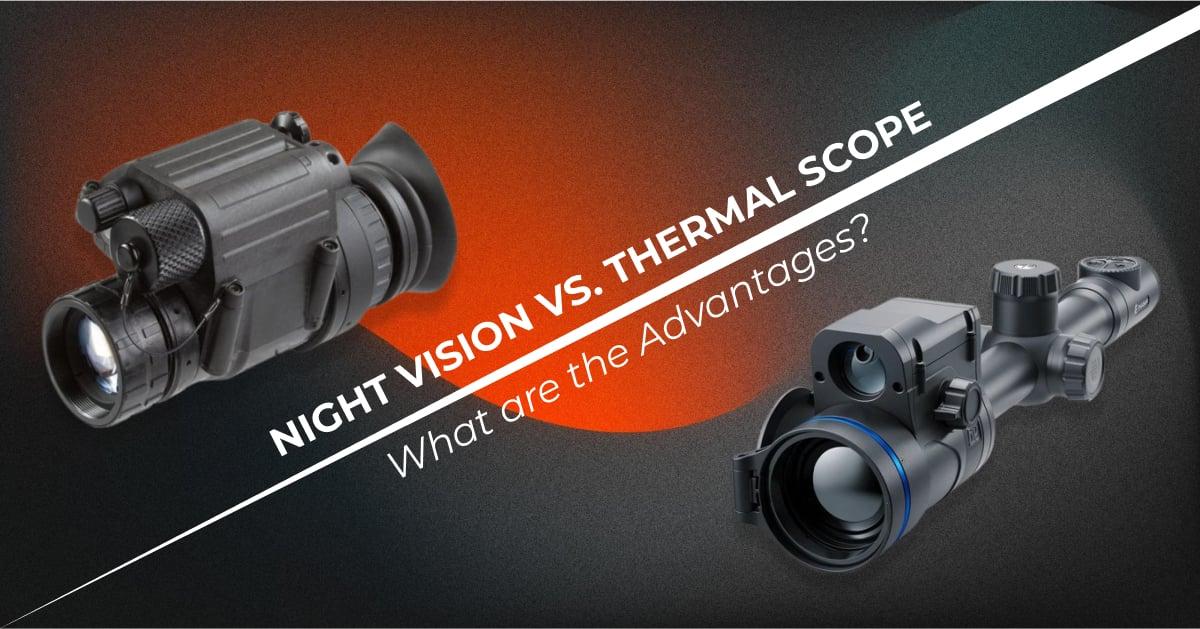
Understanding Night Vision Technology
Night vision devices work by amplifying available light sources such as:
- Moonlight
- Starlight
- Ambient environmental light
- Infrared illumination
Digital night vision systems convert captured light into electronic images displayed on a screen.
Advantages of Night Vision Scopes
- Detailed image presentation
- Natural-looking observation
- Lower equipment cost
- Day and night functionality
- Easy target identification
Ideal Applications
- Hunting
- Wildlife observation
- Property security
- Outdoor recreation
- Farm monitoring
Night vision scopes perform exceptionally well when some ambient light is available.
Understanding Thermal Imaging Technology
Thermal imaging operates differently.
Instead of relying on visible light, thermal devices detect heat emitted by objects.
Every object above absolute zero emits infrared radiation. Thermal sensors convert these heat signatures into visible images.
Advantages of Thermal Imaging Scopes
- Operates in total darkness
- Detects hidden targets
- Effective through smoke and light fog
- Excellent long-range detection
- Rapid target acquisition
Ideal Applications
- Search and rescue
- Security surveillance
- Wildlife detection
- Border patrol
- Tactical operations
Thermal imaging excels at finding targets quickly, even when visual identification is difficult.
Detection vs Identification
One of the most important differences between the two technologies is the distinction between detection and identification.
Thermal Imaging
Best for detecting:
- Human presence
- Animal movement
- Hidden targets
- Heat sources
Thermal devices quickly reveal where something is located.
Night Vision
Best for identifying:
- Animal species
- Human features
- Environmental details
- Equipment and structures
Night vision provides a more recognizable image of the observed scene.
Performance in Different Environments
Forest Areas
Night Vision Advantages:
- Better environmental detail
- Easier terrain recognition
Thermal Advantages:
- Detects animals hidden behind vegetation gaps
- Faster movement detection
Open Fields
Both technologies perform well.
Many professionals prefer thermal imaging for initial detection and night vision for target confirmation.
Urban Security
Night vision scopes often provide superior image detail for:
- Building surveillance
- Perimeter monitoring
- Vehicle identification
Thermal imaging helps locate intruders quickly in large areas.
Weather Performance
Night Vision Scope
Performance may be affected by:
- Heavy fog
- Dense rain
- Smoke
Thermal Imaging Scope
Generally performs better in:
- Darkness
- Light fog
- Smoke-filled environments
- Challenging visibility conditions
However, extreme weather can affect both technologies to some extent.
Cost Considerations
Night vision scopes are typically more affordable than thermal imaging devices.
This makes them attractive for:
- Recreational hunters
- First-time buyers
- Property owners
- Outdoor enthusiasts
Thermal imaging systems often require a higher investment due to advanced sensor technology.
Why Many Professionals Use Both
Increasingly, professional users combine both technologies.
A common workflow includes:
Step 1: Detection
Use a thermal imaging scope to locate targets quickly.
Step 2: Identification
Switch to a night vision scope for detailed visual confirmation.
This combination provides maximum effectiveness during nighttime operations.
INJIE Optical Solutions
INJIE develops advanced optical products designed to meet diverse operational requirements.
Product categories include:
- Digital Night Vision Scopes
- Thermal Imaging Scopes
- Thermal Monoculars
- Laser Rangefinders
- Rangefinder Binoculars
- Thermal Binoculars
Each product is engineered to provide reliable performance, durability, and user-friendly operation.
Future of Night Observation Technology
The future of optical observation is moving toward integrated systems that combine:
- Thermal imaging
- Night vision
- Laser ranging
- Ballistic calculations
- Artificial intelligence
- Wireless connectivity
INJIE continues investing in innovation to provide cutting-edge solutions for global customers.
Conclusion
Choosing between a Night Vision Scope and a Thermal Imaging Scope depends on your specific needs.
If you require detailed image recognition and cost-effective nighttime observation, a Night Vision Scope may be the ideal choice.
If rapid target detection in complete darkness or challenging environments is your priority, a Thermal Imaging Scope offers significant advantages.
For professional users seeking the highest level of performance, combining both technologies can provide the most comprehensive observation solution.
INJIE Optics offers advanced Night Vision and Thermal Imaging products designed to help users see farther, detect faster, and operate with confidence in any environment.